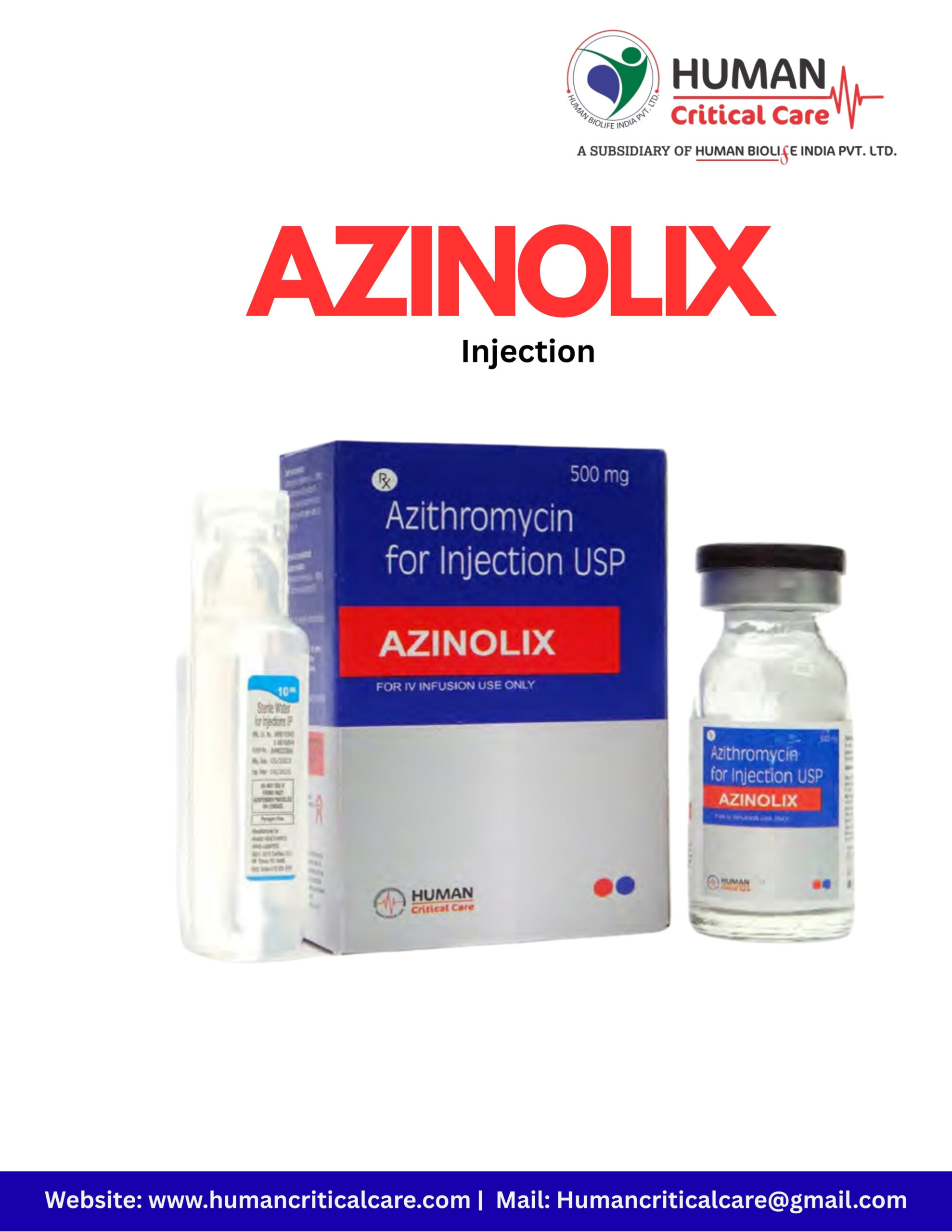
Azinolix contains Azithromycin, a popular macrolide antibiotic, but in an injectable form. While many people take Azithromycin tablets for a common sore throat, the injection is used for much more serious “Community-Acquired Pneumonia” (CAP) and Pelvic Inflammatory Disease (PID). It works by interfering with the protein synthesis of the bacteria—specifically by binding to the 50S ribosomal subunit—which prevents the bacteria from growing and multiplying.
The IV form is chosen when the infection is severe enough to require immediate, high-level concentration in the blood, or if the patient is vomiting and cannot keep a pill down. Azithromycin is known for its “long half-life,” meaning the medicine stays in the body’s tissues for a long time, continuing to fight the infection even after the dose is finished. Common side effects can include nausea, diarrhea, or pain at the injection site. Doctors also monitor heart rhythm (ECG) in some patients, as this class of drugs can occasionally affect the heart’s electrical activity.